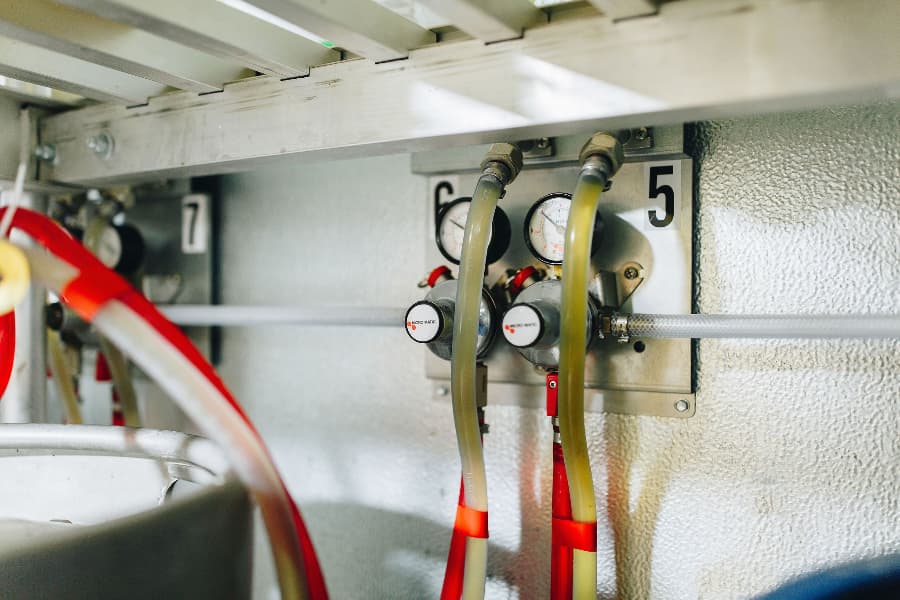
A draft line system relies on core components that work together to efficiently move beer, protect its flavor, and maintain a smooth flow. Each part has a specific role in ensuring quality and consistency. Knowing what each one does helps operators maintain dependable systems that deliver fresh, carbonated beer. They include:
Kegs
The kegs store beer in the draft line system, keeping it sealed, pressurized, and protected from light and oxygen. This preserves carbonation and prevents flavor deterioration, maintaining the brewer’s intended profile. Stainless steel kegs withstand repeated use and temperature changes to keep beer fresh.
Coupler
The coupler is the critical attachment point that opens the keg and allows beer to flow into the system. It also regulates the entry of pressurized gas into the keg, balancing internal pressure to maintain carbonation and ensure a smooth pour. Different beer styles and keg types require specific coupler designs, making proper matching essential for performance and taste.
Beer Lines
Beer lines transport beer from the keg to the faucet. Their material, diameter, and cleanliness directly influence flavor and flow. Quality lines help maintain temperature while reducing friction that can cause foaming or slow pours. Keeping these lines clean is essential, as buildup can introduce bacteria.
Gas Systems
Gas systems supply the pressure needed to push beer through the lines without over-carbonating or flattening it. By carefully balancing carbon dioxide (CO2), or a blend of CO2 and nitrogen, these systems maintain proper carbonation and control the beer’s speed through the system. Properly tuned gas pressure also minimizes foaming, which helps operators increase yield and reduce costly beer waste.
Faucets
Faucets serve as the final control point for releasing beer into the glass, and they typically display the tap handle that identifies the brew. Most standard faucet designs can comfortably pour a wide range of beer styles, including both ales and lagers. Rear‑sealing faucets are the most widely used. They feature small vents which help regulate back pressure and allow the faucet to drain properly between uses. These vents require careful cleaning and regular inspection.
Drip Trays
Drip trays collect excess beer that escapes during pouring, helping keep the bar surface clean and free of spills. By catching overflow before it spreads, they support a more sanitary workspace and reduce the risk of slip hazards or sticky buildup. A drip tray also helps minimize waste and keeps the serving station looking organized and professional during busy service periods.
Each of these vital components work together to contribute to a seamless, top-performing draft system.